British politics · Politics
Liberal Democrats face internal strains after conference policy disputes
Ed Davey has retained parliamentary backing after a frontbench resignation, but disputes over pensions, tax pledges and electoral strategy remain unresolved.
By Nessa Dalric · 4 min read
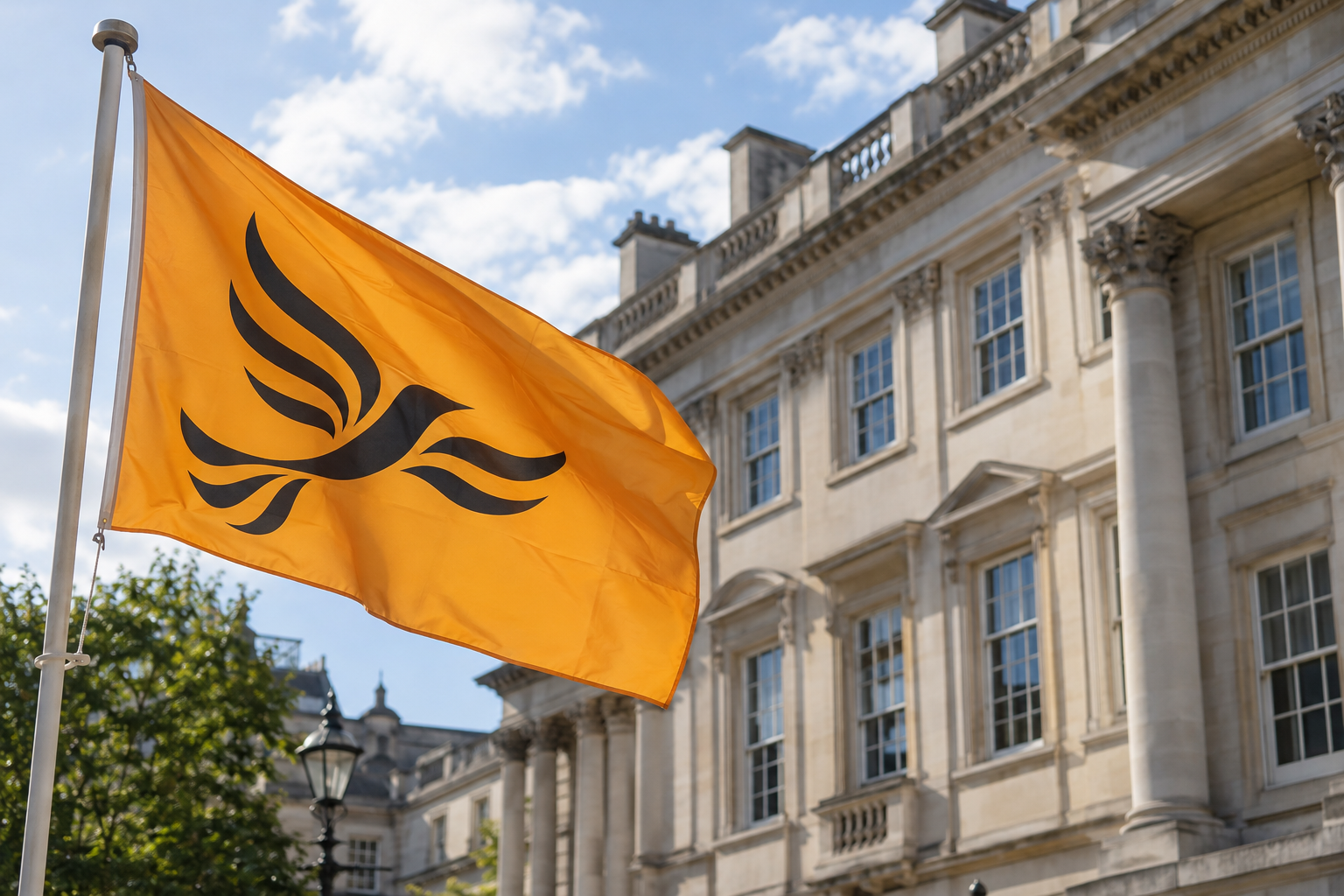
Britain’s Liberal Democrats are trying to restore unity after a frontbench resignation exposed disagreements over Ed Davey’s leadership, economic policy and the party’s appeal to younger voters. MPs backed their leader during a four-hour meeting this week, following Treasury spokesperson Charlie Maynard’s unsuccessful effort to force him out. The immediate challenge has subsided, but the dispute has brought wider frustrations into view after the party’s September conference, leaving Davey with questions about both policy and electoral direction.
The tension comes despite a substantial parliamentary base. The Liberal Democrats secured 12.2% of the vote at the 2024 general election and a record 72 MPs, becoming Westminster’s third-largest group. Since Andy Burnham became prime minister, however, their polling has ranged between 9% and 11%. Those figures frame the argument within the party: Davey’s supporters emphasise his success in converting targeted campaigning into constituencies, while critics question why the party has not attracted more support as Labour’s standing has weakened.
Maynard resigned a week ago after Davey made costly tax-cutting commitments at the September conference. His departure also followed criticism of Davey’s defence of the state pension triple lock, which Burnham is seeking to reform. Tom Gordon and Vikki Slade, both elected in the 2024 intake, were among MPs who responded sharply to the leader’s position. Some colleagues believe resistance to changes in the pension guarantee leaves the party insufficiently attentive to younger voters. The disagreement therefore reaches beyond leadership personalities into whose interests its economic policies should serve.
Read more: Katie Zacharia’s White House press tenure ends after 5 days
The resignation nevertheless appears to have weakened, rather than strengthened, the immediate effort to remove Davey. One frontbench colleague speaking anonymously expressed anger at Maynard’s action, while another criticised the disclosure of internal policy discussions. Tuesday’s parliamentary meeting indicated that opponents did not have enough support to initiate a no-confidence ballot. That response has given the leadership room to regroup, although opposition to the manner of the challenge does not itself resolve the underlying differences over pensions, conference commitments or political positioning.
A broader complaint concerns the opportunity presented by Labour’s difficulties after the 2024 election. Anthony Wells of YouGov said the Liberal Democrats failed to benefit as Keir Starmer’s government became deeply unpopular and lost support. He contrasted that performance with the party’s progress during the 2000s, when it gained ground against a troubled Labour administration. In Wells’s assessment, the party has not established a sufficiently clear identity. He suggested that the Liberal Democrats may have suffered in comparison with the Greens under Zack Polanski, who have communicated more clearly what they represent.
The rules leave Davey exposed to a renewed challenge if parliamentary sentiment changes. Davey could contest that election with nominations from 10% of Liberal Democrat MPs and 200 members drawn from at least 20 local parties. Unlike a Conservative leader who survives a no-confidence ballot, he would receive no year-long protection from another challenge. Survival would therefore not close the procedural route to a further contest.
Read more: Reported ship attacks near Hormuz reach wartime weekly record as oil flows slow
Davey’s defenders argue that his electoral record deserves greater weight than dissatisfaction with national polling. The 2024 campaign concentrated resources on individual constituencies rather than pursuing a larger nationwide vote share without corresponding parliamentary gains. It delivered the party’s largest seat total in its modern form. Deputy leader Daisy Cooper, regarded as a possible future leadership candidate, has urged colleagues to unite around preventing the Conservatives and Reform UK from forming a government. Her intervention places the emphasis on the party’s external opponents rather than an internal succession debate.
Supporters also want to allow recent changes around Davey to take effect. Earlier this year, James Holt became director of political strategy and Ruth Younger became chief of staff. One frontbencher argued that those appointments needed time and said support for initiating a no-confidence vote remained well short of the required threshold. That defence offers a case for patience rather than an immediate change of course, but it comes as some MPs continue to question whether the existing approach adequately addresses the party’s political opportunities.
The electoral calculation is not entirely adverse. Wells believes the Liberal Democrats may be able to retain their current seats without major changes, particularly against more conspicuous but potentially divisive rivals. Their less sharply defined identity could also make them easier partners in government. There is less objection within Labour to working with the Liberal Democrats than with the Greens, he said. Burnham this week threatened to end local power-sharing arrangements with the Greens during a dispute over antisemitism, underlining the different relationships Labour has with the parties.
For now, Davey’s task is to preserve parliamentary support while addressing the policy and strategic disagreements exposed since conference. The next election could give the Liberal Democrats considerable influence if no party secures a majority and Burnham seeks an agreement. That prospect gives their restrained positioning a potential purpose, even as critics demand greater definition. The leadership challenge has stalled; the unresolved question is whether the approach that delivered parliamentary gains can also sustain support and hold the party together.