Hollywood · Entertainment
Paramount completes Warner Bros. takeover with pledge of at least 30 films a year
The combined Hollywood group plans to pair original stories with established franchises, though the supplied statement leaves the balance of its annual big-screen slate undefined.
By Dena Pellwick · 4 min read
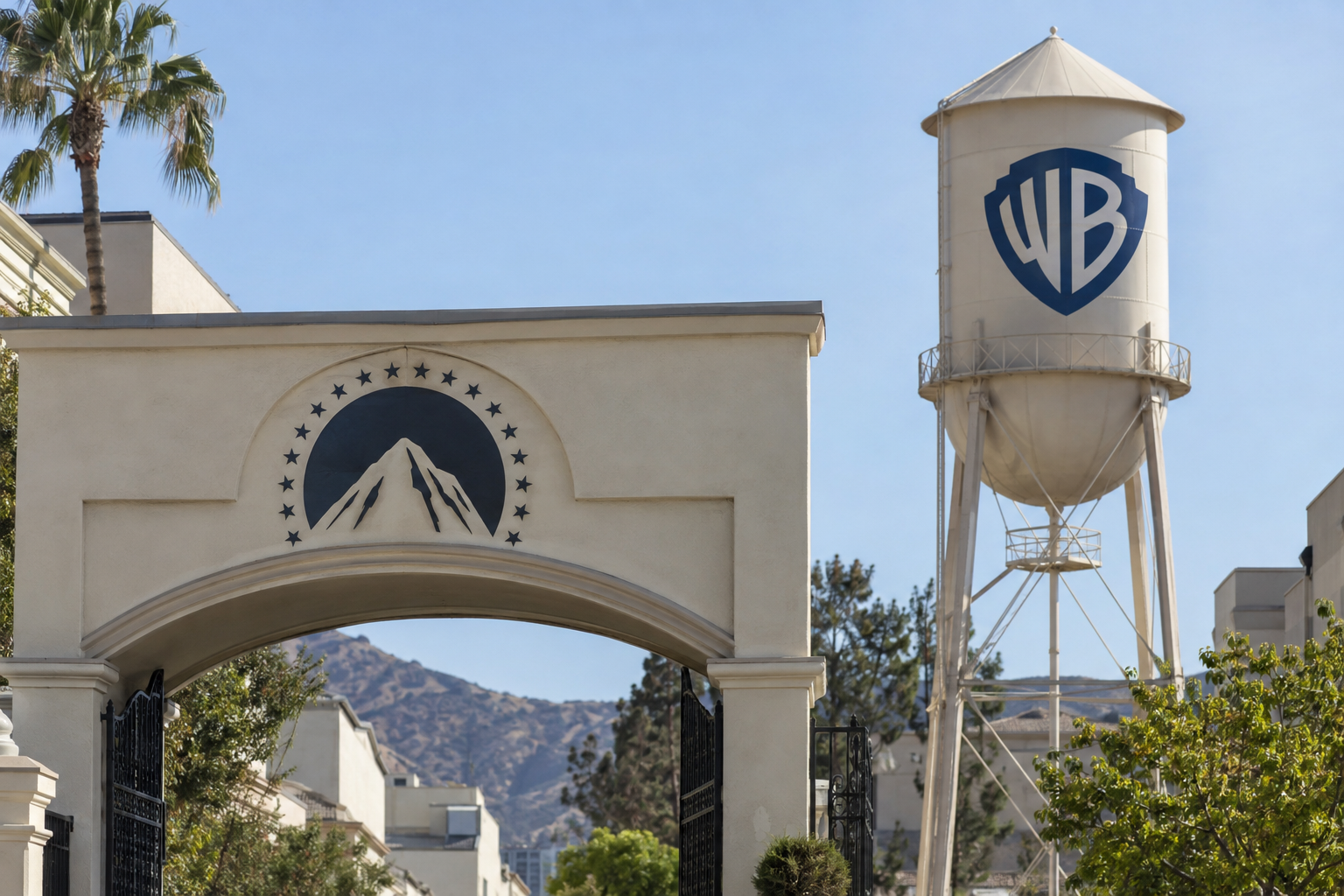
Paramount has completed its takeover of Warner Bros., creating a Hollywood giant with a commitment to make at least 30 theatrical films a year. The pledge sets out an annual big-screen production goal, alongside a strategy that embraces both original stories and established franchises. With the transaction complete, the focus turns to how that broad promise will translate into a sustained film slate and how the group will divide its attention between those priorities.
The key production figure is a minimum, not a fixed annual total: at least 30 movies a year. The stated plan pairs original work from contemporary filmmakers with franchises including Harry Potter, Mission: Impossible, The Lord of the Rings, DC, Transformers and Star Trek. Those names provide a concrete indication of the properties around which the group is presenting its ambitions. They do not, however, amount to a schedule of individual productions or a commitment to release a new instalment of each franchise every year.
The takeover’s completion changes the immediate question from whether Paramount will acquire Warner Bros. to what the combined operation will produce. The annual film pledge gives that transition a measurable objective, rather than leaving the group’s ambitions expressed solely in terms of its enlarged scale. It is nevertheless a forward-looking commitment. Completion of the corporate transaction and delivery of the promised output are separate milestones, and the supplied statement does not establish that the annual production target has already been achieved.
Read more: Israel marks three years since Oct. 7 as Netanyahu faces scrutiny over warnings
The distinction between a minimum and a detailed production plan matters when assessing the figure. A commitment to at least 30 films a year establishes an intended floor for activity, but it says nothing by itself about the budget, timing or commercial prospects of any title. Nor does the supplied statement identify how many films will be original stories and how many will draw on an existing property. The number is therefore useful as a statement of intended volume, while offering a more limited guide to the composition of the slate.
The franchise list gives the strategy more definition without resolving those questions. Harry Potter and The Lord of the Rings sit alongside Mission: Impossible, DC, Transformers and Star Trek in the group’s account of its future big-screen offering. The statement presents them as examples of established properties to be paired with original storytelling, rather than as an exhaustive film-by-film plan. It would be premature to treat the list as confirmation of particular sequels, production starts or release dates, none of which are specified in the supplied details.
Original films are the other explicit component of the commitment. Their inclusion is significant to the stated strategy because the group is not describing its future output exclusively through existing franchises. Yet in the supplied statement, that inclusion is not accompanied by a separate numerical target, named projects or identified filmmakers. The pledge consequently leaves open how much of the annual slate will consist of new stories. Its eventual balance will be important in judging whether the group’s output reflects both elements of the plan, rather than merely meeting the overall production threshold.
Read more: Trump heads to San Antonio for Paxton as Democrats eye Texas Senate opening
There are competing ways to assess such a broad undertaking, even without assuming a commercial outcome. Emphasising the annual minimum highlights the scale of the promised theatrical programme and provides a benchmark against which delivery can be examined. Emphasising what remains unspecified in the statement produces a more cautious reading: volume alone cannot establish the creative range or performance of the films. These are different interpretations of the same commitment, not evidence that either its success or its shortcomings can already be demonstrated.
The pairing of original stories and franchise properties also creates a question of allocation within the slate. Both are expressly part of the plan, but the supplied statement does not explain how decisions between them will be made. An annual programme of this scale could accommodate both ambitions; the stated minimum does not guarantee any particular distribution. For now, the clearest conclusion is narrower: the combined group has committed to a substantial level of theatrical filmmaking without setting out, in the supplied details, the individual projects that will fulfil it.
The available details likewise do not attach a starting year or a detailed timetable to the annual pledge. That limits how precisely the commitment can be assessed from this material. A fuller production and release plan would make it possible to distinguish the corporate ambition from the films selected to carry it out. Until then, the takeover’s completion is the confirmed development, while the intended pace of theatrical output remains a promise about the combined group’s future activity.
What comes next, in assessing that promise, is evidence of the slate itself: which original stories proceed, which franchise projects are selected and how they fit into the annual programme. The supplied statement provides a clear headline measure in the commitment to make at least 30 theatrical films a year, but not a complete account of execution. The completed takeover establishes the enlarged Hollywood operation; its forthcoming film choices will show how the group intends to turn scale into a programme that encompasses both new stories and established properties.