France · Art
Paris museums close as more than 400,000 protest across France
The Louvre and other major museums shut on Saturday, while Art Basel cancels its weekend programme amid the threat of unrest.
By Calla Brenmoor · 3 min read
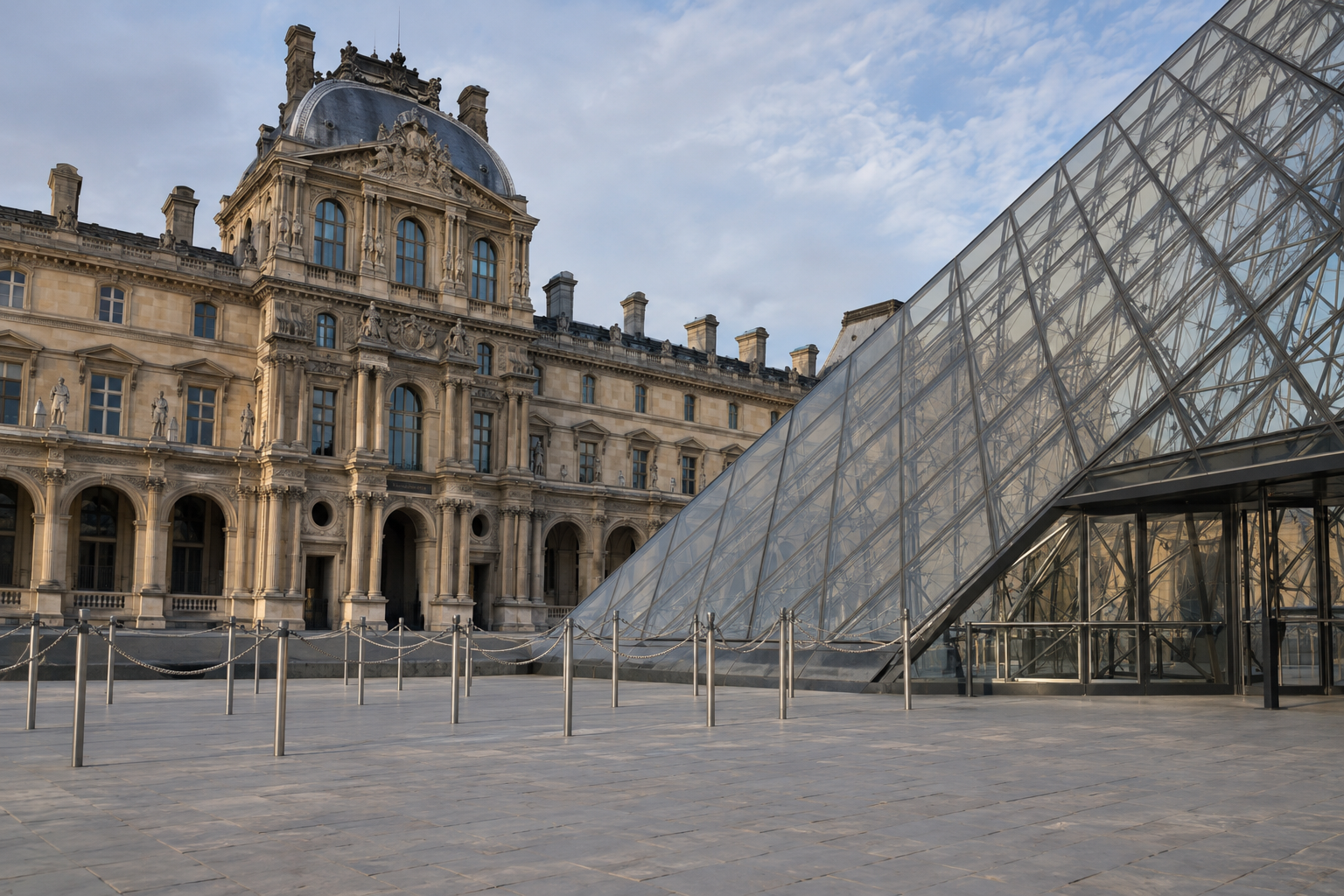
Major Paris museums closed on Saturday as demonstrations across France disrupted the country’s cultural life, with clashes in the capital and the threat of further unrest affecting a contemporary art fair. The Louvre, Orsay Museum, Picasso Museum and Grand Palais were among the institutions shut. Art Basel’s organisers also cancelled the fair’s weekend programme, leaving Friday as its only day open to the public and narrowing access to art in Paris beyond the museum closures.
More than 400,000 people protested across France, challenging Macron in unrest that extended beyond Paris. That figure measures participation nationally, rather than the size of demonstrations in the capital or the number of people affected by the cultural shutdowns. The distinction matters: the museum closures provide a concrete indication of disruption in Paris, while the national turnout establishes the broader scale of the protests. Stores also put up barricades as France prepared for more demonstrations.
The closures affected a group of prominent museums rather than a single institution. Alongside the Louvre, the Orsay Museum and Picasso Museum were closed for Saturday, as was the Grand Palais, where a Cézanne exhibition was on display. The exhibition therefore formed part of the cultural programme made inaccessible by the shutdowns. The available information establishes the institutions’ Saturday status, but does not give reopening dates or indicate how long any individual museum expected disruption to continue.
Read more: Monet’s ‘Iris’ sets French auction record for artist at €50m
Art Basel faced a different scheduling consequence. The contemporary art fair had opened to the public on Friday, but organisers cancelled the weekend programme because of the threat of unrest. Its public opening was consequently limited to that day. Unlike the museums’ Saturday closures, the fair’s decision explicitly covered the weekend. Both developments restricted cultural access, but they should not be treated as identical interruptions: one concerned museum opening, while the other removed the remaining weekend programme of a fair.
The unrest also reached Lyon, where a demonstration on October 24, 2026, had been prohibited by local authorities. Called by the Yellow Vests movement, it included French high school and university students and focused on the cost of living and rising fuel prices. A fire set by protesters was visible during the demonstration. That episode places the Paris cultural closures within a wider picture of protest, while providing specific grievances associated with the action in Lyon.
Those grievances are distinct from the immediate concerns evident in the cultural response. The Lyon demonstrators were protesting living costs and fuel prices; the threat of unrest prompted Art Basel’s organisers to cancel their weekend programme. These are different perspectives on the same period of disruption, not evidence of a direct dispute between protesters and arts institutions. Nothing in the supplied information identifies the museums or the fair as targets of the demonstrations, or sets out their positions on the protesters’ demands.
Read more: U.S. reduces embassy staffing as warnings of Iranian threats intensify
The national participation figure is the clearest measure of the protests’ scale, but it cannot quantify their effect on the arts. More than 400,000 demonstrators across France does not translate into a count of missed museum visits, lost exhibition attendance or cancelled fair visits. No such attendance figures are provided. What can be established is the loss of Saturday access at the named museums and the cancellation of Art Basel’s weekend public programme after its Friday opening.
The sequence at Art Basel shows how an event could begin admitting the public yet still have its schedule curtailed by the threat of unrest. The museum shutdowns, meanwhile, meant that the disruption was not confined to the fair. Together, the decisions affected both museum visits and access to a contemporary art event. The information does not establish whether the institutions coordinated their decisions, and their closures should not be taken as evidence of a single, formally announced cultural shutdown across Paris.
Barricades at stores added another visible sign of preparations beyond the arts. Along with the museum closures and the fair’s cancellation, they showed how anticipated demonstrations were influencing activity in the capital. Paris clashes formed part of the national unrest, but the available account does not connect a particular clash to any named museum. The narrower, supported conclusion is that major cultural institutions were closed amid the disturbances, with the fair explicitly acting over the threat of unrest.
What follows for cultural access remains less clear than the immediate cancellations. France was preparing for further protests, while the confirmed museum closures concerned Saturday and Art Basel’s cancellation covered the weekend. No replacement programme for the fair or reopening timetable for the museums is specified in the supplied information. For now, the consequence for Paris’s art calendar is concrete: several major museums were unavailable, the Cézanne exhibition was behind closed doors, and the fair’s public programme had been cut short.