Culture · Culture
$20m gift to establish Philadelphia Museum of Art education center
The donation from Lois G. and Julian A. Brodsky will fund a north-wing learning center intended to strengthen connections with schools, families and children, particularly in underserved communities.
By Oren Valcett · 3 min read
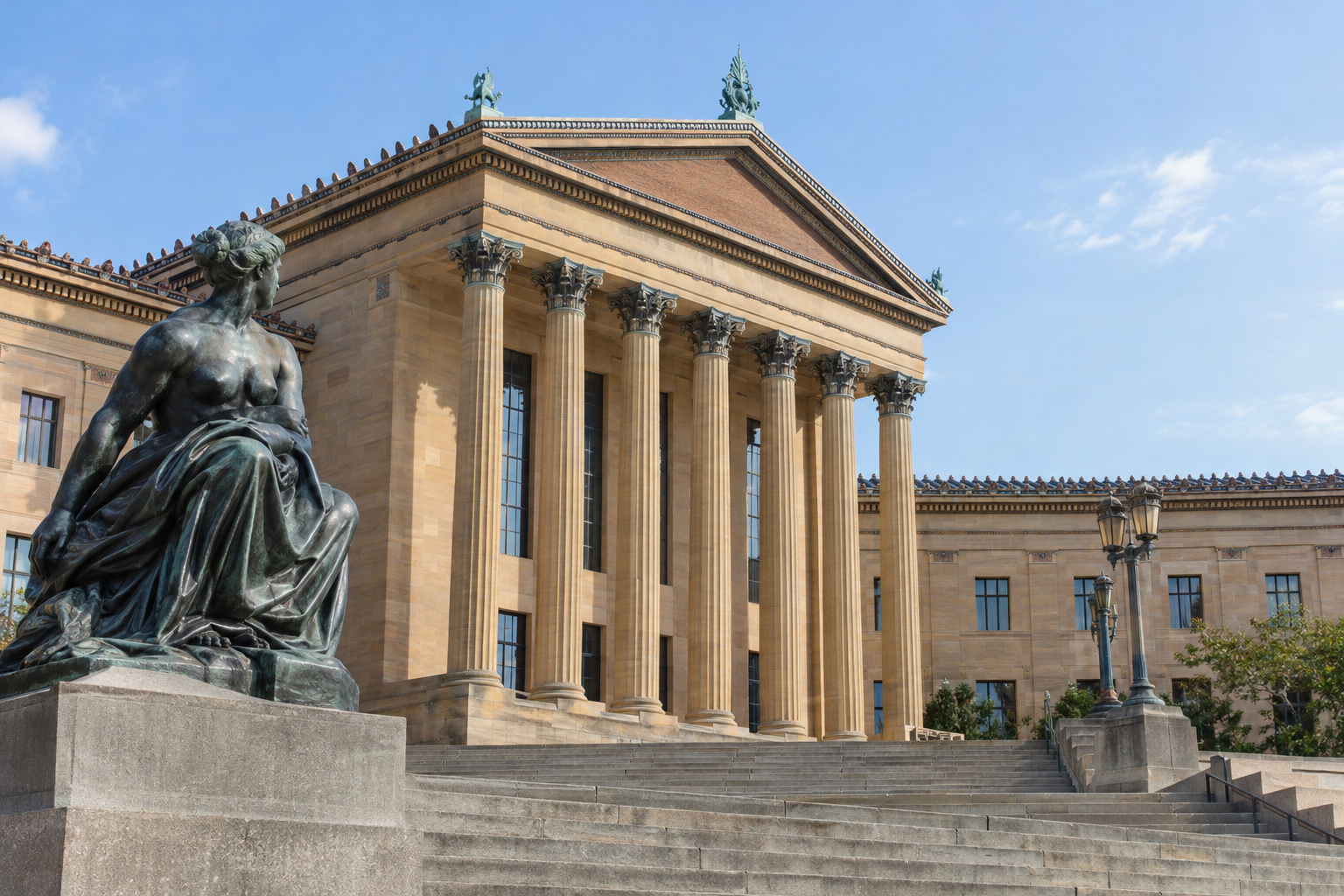
The Philadelphia Museum of Art has received a $20m gift from Philadelphia philanthropists Lois G. and Julian A. Brodsky to establish an education center serving schools, families and children. The Lois G. and Julian A. Brodsky Learning and Engagement Center will occupy the museum’s north wing, giving its educational work a dedicated setting. The project is intended to bring younger visitors and their families into closer contact with the collection, with particular attention to people from underserved communities.
The center will draw on encyclopedic holdings of approximately 245,000 works of art. It is the museum’s first major capital project since a $233m renovation and expansion designed by Frank Gehry and completed in 2021. That earlier undertaking reworked around 90,000 sq. ft of the museum and added 20,000 sq. ft of galleries and public spaces. The new gift places education at the center of a major capital project, linking a physical change in the museum to its ambitions for broader community engagement.
Philadelphia architecture firm MGA Partners will unveil the design next year. The firm has previously worked within the museum, leading the redesign of its 4,000-sq.-ft auditorium in 2017. Its forthcoming design will address a different brief: creating a north-wing setting for learning and participation. Museum director Daniel Weiss said the design process was being guided by the aim of making that wing a dedicated educational hub, expanding the institution’s ability to support both creative learning and civic engagement.
Read more: Tetsuya Chiba, manga artist behind ‘Ashita no Joe,’ dies at 87
Weiss described a space built specifically for educational experiences rooted in the collection. His account of its intended uses extends beyond hosting school groups: the center is also meant to accommodate community discussions, programs for teenagers and activities bringing different generations together. An open approach to the design is intended to make the museum more approachable and help build relationships. Those objectives position the center as a place for sustained interaction with visitors and community partners, rather than simply another area for displaying art.
The figures describe distinct aspects of the museum’s development. The $20m gift supports an education-focused project, while the $233m undertaking completed in 2021 reshaped galleries and public areas across a much broader renovation. The collection’s approximately 245,000 works, meanwhile, represent the artistic resources on which the learning center can draw. These measures are not interchangeable: the size of a donation, the extent of a building project and the scope of a collection each illuminate a different part of the museum’s plans.
The museum’s stated ambitions also distinguish between providing space and building participation. Weiss’s emphasis on relationships, community dialogue and partnerships makes engagement an objective alongside the physical transformation. The center is intended to help younger audiences connect with the holdings, but its role will not be confined to children visiting on their own or with schools. Families and multigenerational programs are part of the same brief, bringing an emphasis on shared learning to the plans for the north wing.
Read more: Tashkent’s modernist architecture enters UNESCO World Heritage List
For Lois Brodsky, the gift follows a long association with the museum’s visitor-facing work. She began volunteering in 1982 and served as a weekday guide from 1986 to 2019. She now sits on the committee covering conservation, European art, prints, drawings and photographs. Her museum involvement thus spans years of guiding visitors as well as continuing work on matters concerning the collection and its care.
Julian Brodsky, a co-founder of Comcast Corporation, joined the museum’s board in 1995 and became a trustee emeritus in 2024. He currently serves as vice chair of its library and archives committee. Together, the couple have supported exhibitions and installations as well as other museum needs. Their contributions included funding for the reinstallation of the 19th-century European painting galleries in 2019, placing the new center within a record of support that encompasses both the presentation of art and the institution behind it.
Their earlier giving also addressed the museum’s staffing and long-term resources. In 2009, the Brodskys participated in a matching campaign to create permanent endowments for curatorial and other museum staff. They also made substantial contributions to the museum’s 125th-anniversary campaign, which raised $250m in 2005. That campaign saw the Constantin Brancusi gallery renamed the Lois Green Brodsky Gallery. The education center will add another named setting to a philanthropic relationship that has supported galleries, personnel and now a dedicated learning environment.
The next stated milestone is MGA Partners’ design unveiling next year. That presentation will set out the architectural response to the museum’s educational brief. Weiss’s priorities include space for students, community-led discussion and partnerships supporting Philadelphia’s cultural life. The project’s central purpose remains connecting those activities to the collection: using the north wing not only to accommodate visitors, but to give schools, children and families a dedicated place to engage with the museum’s art.