Gulf art · Art
Art Basel Qatar names 82 galleries for 2027 amid regional war fears
The Doha fair’s second edition will include 30 newcomers as organisers expand their commitment to Qatar against a backdrop of renewed regional conflict concerns.
By Calla Brenmoor · 4 min read
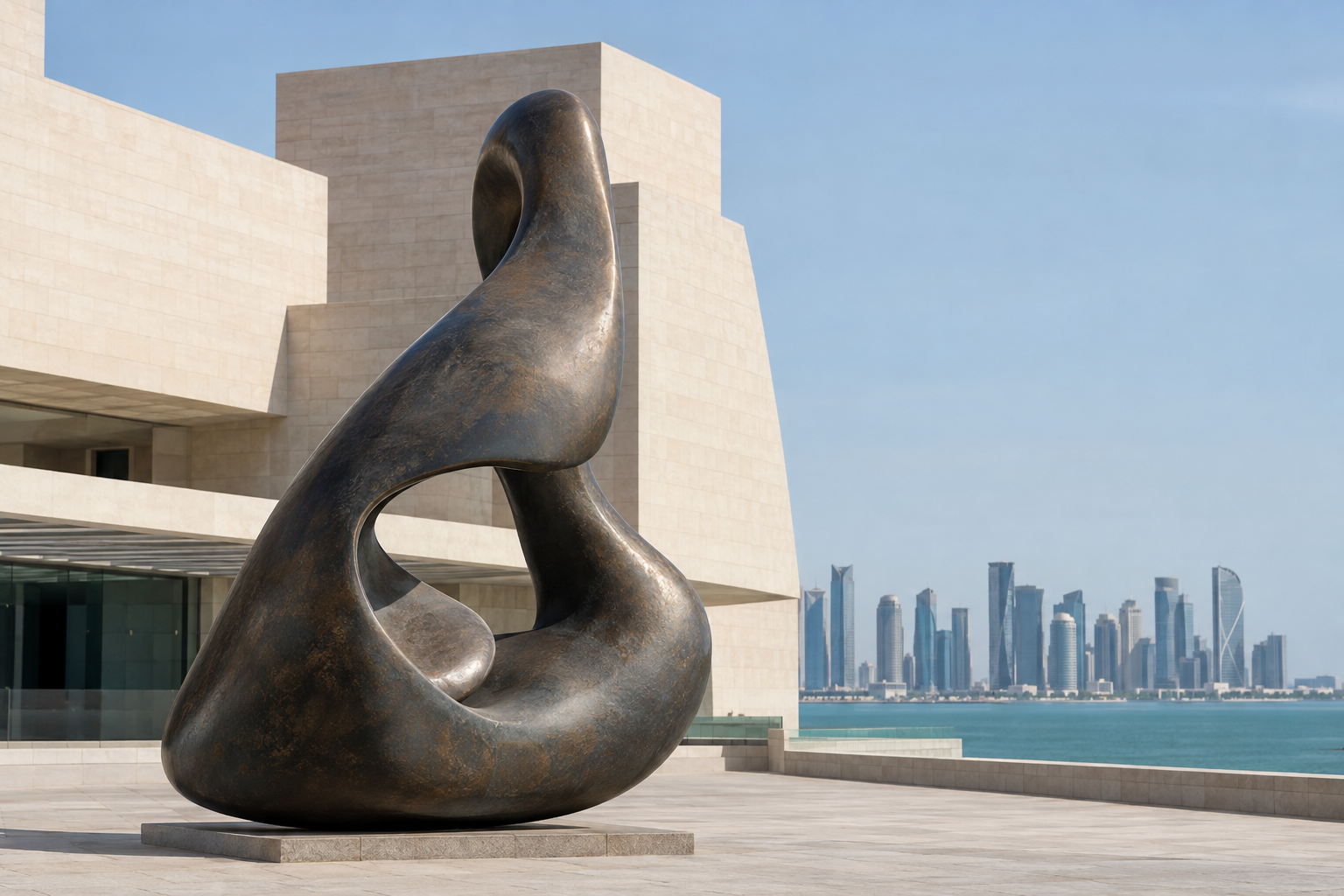
Art Basel Qatar has announced the galleries selected for its second edition, pressing ahead with plans to develop Doha’s art market as renewed fears of war hang over the Gulf. The announcement on 27 October 2026 comes as Art Basel is also preparing a year-round programme in Qatar, extending its work beyond the annual selling event to encourage collecting and support the regional market’s longer-term development.
Eighty-two galleries plan to participate, compared with 87 at the inaugural edition, with 30 first-time participants joining the roster. The fair is scheduled for 28 to 30 January 2027 at M7 and Doha Design District, following VIP previews on 26-27 January. The slightly smaller overall line-up masks a substantial change in exhibitors: 35 galleries, or around 40% of those at the first edition, are not returning. The list combines international dealerships with a substantial contingent operating in the surrounding region.
Those preparations are taking place against a backdrop of regional security concerns. Neighbouring Saudi Arabia experienced renewed bombardment earlier in October 2026, while reports of the US and Israel possibly resuming war with Iran have added to regional uncertainty. For a fair intended to help establish an art market in Doha, the risk sits alongside the practical task of attracting galleries and visitors. The exhibitor announcement nevertheless sets out a January schedule and an expanded commitment to activity between editions.
Read more: Klimt landscape returns to auction with estimate of up to $80 million
Among the galleries absent from the second edition are Hauser & Wirth and Pace, along with Dubai’s Gallery Isabelle and Carbon 12. New participants include Isla Flotante, which operates in Buenos Aires and São Paulo; London’s Pilar Corrias; and Silverlens, based in Manila and New York. The figures therefore describe more than a modest contraction in the number of stands. They also show a significant reshaping of participation, although the turnover alone does not establish why individual galleries are attending or staying away.
Art Basel’s explanation centres on the exhibition format rather than the overall size of the roster. Vincenzo De Bellis, its global director of fairs, said theme-based sections tend to have greater turnover across its events, and that this approach applies to the whole Qatar fair. Selection, he said, depends closely on how proposed solo presentations address the edition’s theme. His account offers a different reading of the departures: changes in the list can reflect curatorial selection, not simply continuity or retreat in galleries’ commercial commitment.
The theme for 2027 is “between”, chosen by Iraqi curator Wassan Al-Khudhairi, the fair’s artistic director. Al-Khudhairi was founding director of Doha’s Mahtaf Museum from 2007-12 and succeeds Wael Shawky, who curated the inaugural edition. Every presentation is expected to respond to her theme, making the curatorial framework central to the fair’s identity as well as its selection process. The arrangement places individual artists and their proposed presentations at the centre of an event whose broader purpose is also to stimulate a market.
Read more: Italy and African partners expand cooperation against art trafficking
Almost half the participating galleries have spaces in the Middle East, North Africa and South Asia, known as Menasa, maintaining a feature of the inaugural edition. Beirut’s Marfa’ Projects will present Lebanese artist Stéphanie Saadé, while India’s Nature Morte will show sculptor Ayesha Singh. Their inclusion gives the line-up a regional foundation alongside the international galleries. It also distinguishes the geography of the participating businesses from the breadth of the artists represented, with the roster bringing together practices from across the wider art world.
The announced presentations range from Sylvia Kouvali’s showing of kinetic art pioneer Liliane Lijn to Lisson Gallery’s Anish Kapoor and Perrotin’s Takashi Murakami. Silverlens will make its debut with Pacita Abad, while fellow newcomer Gió Marconi will present Sonia Delaunay. White Cube is bringing Park Seo-Bo, and David Zwirner will show Oscar Murillo. These selections underline the mix of established international names and newly participating dealerships within the theme-led structure, rather than a programme defined solely by the locations of its exhibitors.
Beyond fair week, Art Basel plans masterclasses and workshops intended to cultivate new collectors in Qatar. Chief executive Noah Horowitz said the year-round programme was designed to strengthen engagement with collectors between fairs and contribute to sustained regional market growth. That initiative addresses a different challenge from assembling an exhibitor list: encouraging collecting activity that continues outside the event itself. It also makes the second edition part of a longer-term effort, rather than leaving the development of the market concentrated in fair week.
Visitors in January will also be able to see the first Rubaiya, a quadrennial exhibition in Doha bringing together more than 120 artists, including Saodat Ismailova and Rirkrit Tiravanija. That exhibition will provide a wider artistic programme alongside the commercial fair. The next stage for Art Basel Qatar is to turn its announced roster and collector-development plans into the second edition, with its theme-led format, changing gallery participation and regional security uncertainty all shaping the context in which it will take place.