Cultural heritage · Art
Italy and African partners expand cooperation against art trafficking
A training programme involving professionals from nine French-speaking African countries places collection records, provenance research and investigative cooperation at the centre of heritage protection.
By Calla Brenmoor · 4 min read
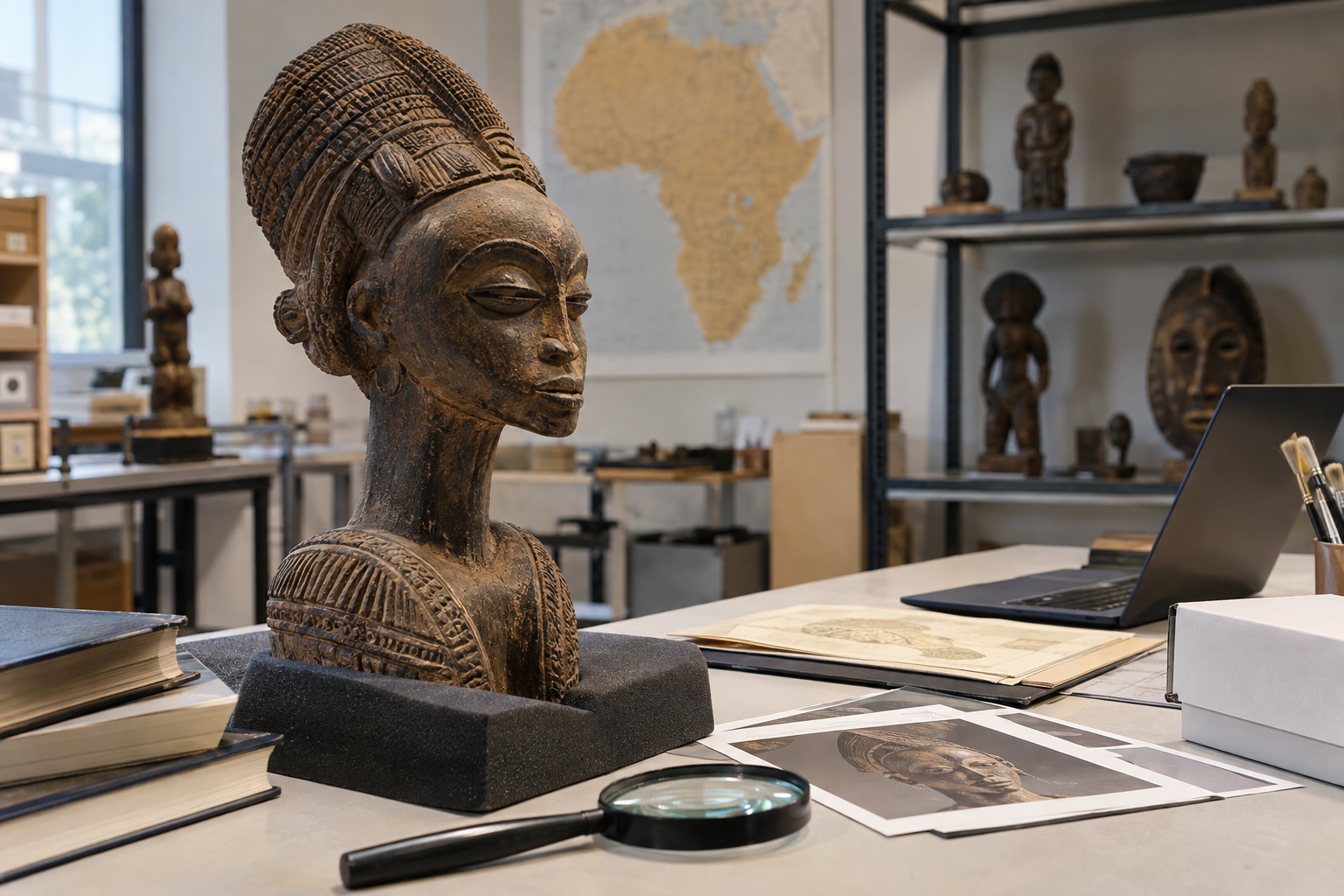
Italy and African partners are strengthening efforts to combat the illicit movement of cultural heritage through a professional training programme designed to help museums and cultural institutions identify objects at risk and establish their histories. Included in Italy’s Piano Mattei for Africa, the initiative connects the everyday management of collections with the investigative work needed to detect trafficking, recover artefacts and support their return. Its emphasis is prevention as well as restitution.
The programme rests on a three-year agreement between Italy’s National School for Cultural Heritage and Cultural Activities and the École du Patrimoine Africain, or EPA, based in Porto-Novo, Benin. Its first course began in October 2026, bringing together professionals from nine French-speaking African countries: Algeria, Côte d’Ivoire, Gabon, Morocco, the Republic of the Congo, the Democratic Republic of the Congo, Rwanda, Senegal and Tunisia. Italy’s Carabinieri Command for the Protection of Cultural Heritage, known as the TPC, is contributing investigative knowledge and experience of cross-border cooperation.
The curriculum concentrates on collection documentation, digital inventories and provenance research: establishing an object’s previous locations, owners and route into the market. These records can help distinguish a documented transfer from a transaction requiring further scrutiny. Missing paperwork, unexplained ownership changes and exports without the required permission can provide indications that an object was stolen or came from an illegal excavation. The aim is to equip museum and heritage professionals with the technical skills to recognise such gaps and reconstruct the circumstances behind them.
Read more: Art Basel Qatar names 82 galleries for 2027 amid regional war fears
Traceability also matters before an object reaches a private collection or an international sales channel. Artefacts taken through looting, including those originating in unstable areas, may be easier to identify when institutions maintain current inventories and share digital records. Those tools can give authorities information with which to begin an investigation. The programme therefore treats documentation as more than an administrative task: records held by museums and cultural bodies can become part of the evidence needed to follow an object across borders.
Italy brings to the partnership a specialised policing institution established in 1969. The TPC investigates stolen cultural property, unauthorised excavations, illegal exports and transactions involving works of unlawful origin, cooperating with judicial authorities and police abroad. Its participation links the training to practical experience in identifying objects and pursuing their recovery. The intended relationship extends beyond individual courses, with the programme seeking durable connections among professionals, public administrations and institutions in Italy and the participating African countries.
An example of that investigative cooperation came in 2022, when the TPC worked with the Manhattan District Attorney’s Office and Homeland Security Investigations in the United States. The operation secured the return of 58 Italian archaeological objects that had entered the country through international trafficking networks, including material from the Etruscan, Roman and Magna Graecia periods. That figure records a completed recovery, rather than a measure of the new programme’s performance. It illustrates the operational role that shared information and cooperation between authorities can play.
Read more: Klimt landscape returns to auction with estimate of up to $80 million
The partnership also sits within a history in which Italy has been responsible for removing African heritage. The Axum obelisk, a stele around 1,700 years old, was taken from Ethiopia by Italian troops in 1937 during the fascist occupation and brought to Rome. Following prolonged requests and negotiations, Italy returned it in 2005. It travelled in three large sections and was reassembled at its original location in 2008, with UNESCO involvement and Italian funding. The case places present-day cooperation alongside the responsibilities arising from earlier removals.
Restitution can also separate legal ownership from an object’s immediate location. In 2022, the foundation responsible for Berlin’s state museums transferred ownership of 512 objects in the Ethnological Museum’s collection to Nigeria under a wider agreement encompassing other artefacts. Some remained temporarily exhibited in Berlin as loans after Nigeria acquired ownership. Unlike the 58 objects recovered through the Italian-American investigation, the 512 figure describes an ownership transfer. The examples show different routes through which cultural property can be recovered or control over it restored.
The international framework includes the 1970 UNESCO Convention, under which states undertake to address unlawful imports, exports and transfers of cultural property and cooperate on recovery. It also promotes preventive measures, including national inventories, export certification and oversight of the art trade. Those provisions connect the programme’s focus on institutional records with the wider legal effort against trafficking. Recovery operations, ownership agreements and better documentation address different aspects of heritage protection rather than serving as interchangeable measures of progress.
Italy’s Culture Ministry, through its Directorate-General for European and International Affairs, is supporting the training and professional exchanges. Culture Minister Alessandro Giuli has described the fight against illicit trafficking as a shared responsibility requiring specialist skills and institutional cooperation, stressing that the agreement rests on reciprocity, knowledge exchange and respect for cultural identities. His emphasis on reciprocal learning distinguishes the stated ambition from a one-directional transfer of European expertise. The programme aims to foster sustained collaboration, linking collection care and provenance research with the shared protection of historical memory and communities’ cultural rights.