France · Opinion
France’s proposed €1.2 billion education increase faces a test of priorities
As parliament debates the 2027 budget, student protests expose competing judgments about whether higher school spending can meet educational needs within France’s fiscal constraints.
By Editorial Board · 4 min read
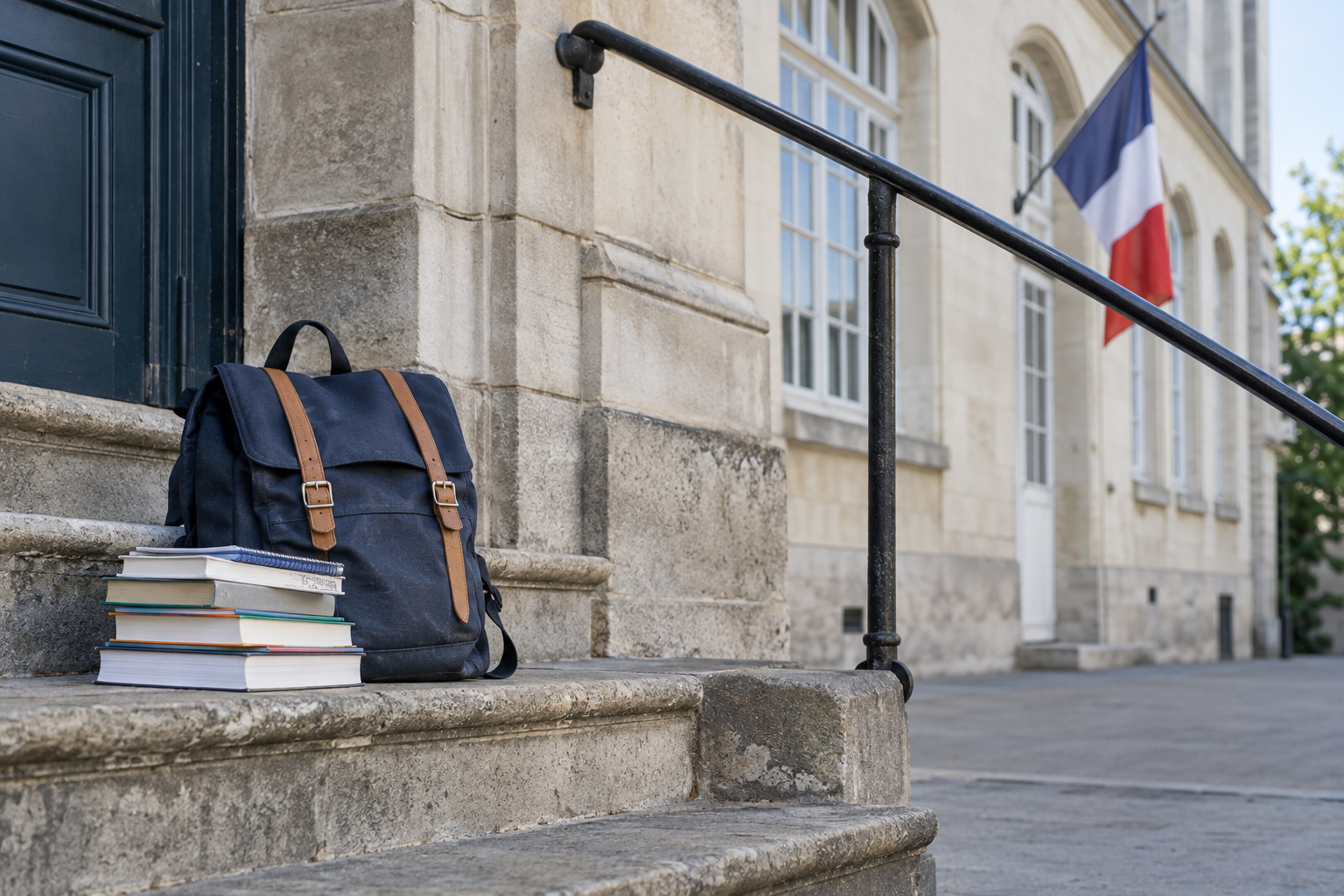
France’s school protests have brought a question of political priorities into the National Assembly’s budget debate: what constitutes adequate investment in education when public finances are already strained? Students and trade unions demonstrated again on 13 October 2026 as lawmakers began considering the government’s proposals for 2027. Their grievances concern the daily experience of education, from absent teachers to deteriorating buildings. The government’s response includes a proposed funding increase and a targeted staffing initiative. The dispute is therefore not simply over whether spending should rise, but whether the proposed response matches the problems protesters describe.
The central figures explain why a proposed funding increase has not settled the argument. The government proposes an additional €1.2 billion for the National Education Ministry. Critics describe the increase as 1.6%, against forecast inflation of 1.8%, arguing that the allocation would fail to keep pace with rising prices. France meanwhile has one of the eurozone’s highest public deficits. These figures point towards competing tests of the budget: whether it represents an effort under fiscal pressure, and whether it preserves the resources schools need to operate.
The movement began with protests and school blockades in the Paris suburbs in mid-September before spreading across France. Teaching unions identify long school days, crowded classrooms, poor facilities and teacher absences as unresolved concerns. Elisabeth Allain-Moreno, secretary-general of SE UNSA, considers the government’s response inadequate. Morgane Verviers, secretary-general of UNSA Education, argues that students are now articulating problems her union raised years ago without being heard. Their position challenges any account of the demonstrations as merely a reaction to the latest budget proposal: they describe accumulated shortcomings, not a newly discovered funding dispute.
Read more: The limits of a forecast $992bn art transfer
The proposed education increase comes against the backdrop of France’s high public deficit. The proposal would direct more money to education despite that constraint; it is not an announced reduction in the ministry’s funding. That distinction matters when assessing the choices before parliament. But a nominal increase does not by itself establish that services can improve. Equally, the inflation comparison advanced by critics signals pressure on purchasing power without establishing how every school’s circumstances would change. The aggregate allocation cannot alone answer questions about staffing, facilities or distribution.
An immediate test concerns delivery rather than the size of the budget. Education Minister Édouard Geffray announced on 8 October that 3,000 available supply teachers would be sent to more than 500 priority schools by Tuesday, 13 October. On that Tuesday, he reported that only 35% of the target had been reached. The initiative was intended to address teacher absences through a focused response. Its incomplete implementation also raises the question of whether announcements translate into classroom support. Money and execution are related, but the deployment figures do not establish that funding alone explains the shortfall.
Students are also challenging the ranking of public priorities. Sabrine Kharbach, a spokesperson for l’Union Etudiante, France’s biggest student union, argues that the government has underestimated young people’s understanding of economic choices. She points to military expenditure to challenge the adequacy of education funding. The relevant defence commitment is a total €413.3 billion for 2024 to 2030 under the Military Programming Law. That is a multiyear allocation, not an annual addition comparable with the proposed education increase. The distinction limits the numerical comparison without dismissing her underlying argument that spending choices express political preferences.
Read more: Omar seeks donations amid reported federal investigation and home search
The competing positions thus involve different standards of judgment. The government’s proposed allocation can be assessed against constrained public finances, while unions assess its sufficiency against conditions in schools and the price outlook. Students such as Kharbach broaden the test to the balance between education and other commitments. None of those perspectives alone resolves the others. A larger headline allocation need not demonstrate adequate provision; a catalogue of unmet needs does not settle how expenditure should be financed. The parliamentary debate puts those unresolved choices alongside the practical question of what schools can deliver.
The protests have acquired a wider political and international audience. Swedish activist Greta Thunberg joined Tuesday’s demonstrations, arguing that young people were being excluded from decisions affecting their future. Students in Belgium and Italy also demonstrated over the preceding week after the French grievances resonated with them. Jean-Luc Mélenchon, leader of the hard-left France Unbowed party, joined the protests as well. Such support raises the movement’s visibility, but the presence of prominent campaigners and opposition politicians neither proves nor disproves its claims about educational conditions.
Public order adds another dimension without answering the funding question. Many demonstrations have been peaceful, while others have involved riots on their fringes and confrontations with police. Figures released by the Ministry of Justice on Friday recorded 6,877 arrests since the movement began, mostly involving minors. More than 215 students and nearly 800 police officers have also been injured. These consequences warrant attention in their own right. They should not be treated as a measure of the merits of either the proposed budget or the protesters’ educational demands.
As the Assembly considers the 2027 proposals, the substantive test will be whether the debate connects financial commitments to the shortcomings identified by schools’ advocates. The supply-teacher programme already provides a concrete benchmark for implementation. The proposed funding increase provides another, though its nominal size and the inflation comparison answer different questions. A balanced assessment must retain both the fiscal constraint facing the government and the service pressures described by unions and students. The choice is not exhausted by announcing more money or demanding it: allocation and delivery remain central to judging the response.