Global economy · World
IMF warns Saudi attacks could have worldwide consequences
Escalation between the Houthis and Saudi Arabia raises fears of worsening global crises, with energy markets already disrupted by the Iran-US conflict and record emergency oil-stock releases announced in March 2026.
By Ilan Corven · 3 min read
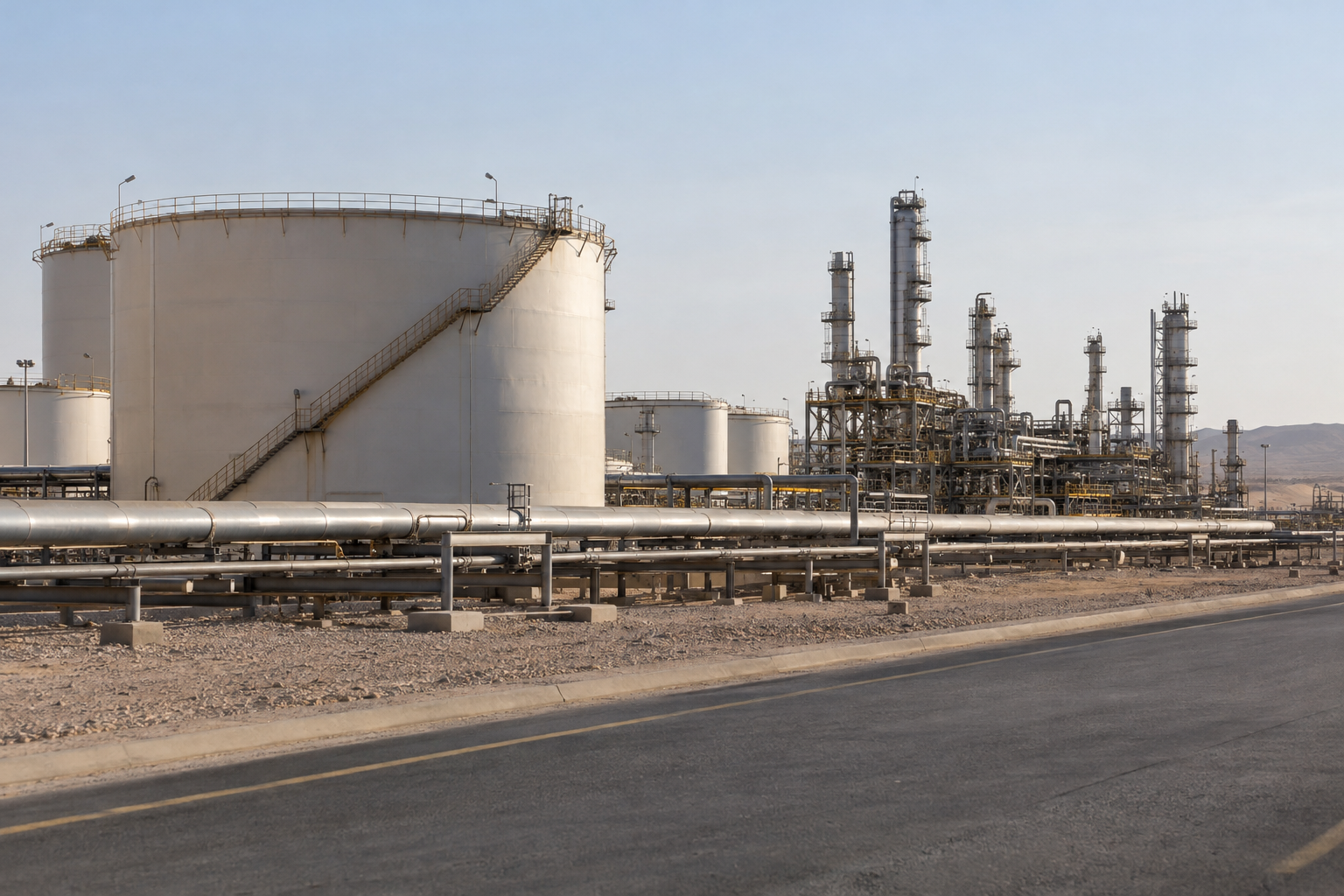
The International Monetary Fund has warned that attacks on Saudi Arabia could have consequences for people worldwide, as escalation between the Houthis and Saudi Arabia raises fears of deepening global crises. The warning comes in a broader economic setting: energy markets are already disrupted by the continuing conflict between Iran and the US, leaving another escalation to add to pressures rather than arise against an otherwise undisturbed backdrop.
The International Energy Agency announced the largest-ever emergency releases of oil stocks on to the market in March 2026 and subsequently pledged to accelerate them after a meeting of oil ministers. The record scale of that announcement provides context for the energy-market concerns. It also places the latest escalation against a backdrop of an exceptional emergency measure already announced, not a situation in which such action has yet to be contemplated.
The IMF has separately warned that the global economy could soon test the limits of resilience. That broader warning should be distinguished from its warning about the possible worldwide impact of attacks on Saudi Arabia. The escalation raises the possibility that worsening conditions could compound global crises and affect growth. The distinction matters: the concern is about additional pressure amid crises already under way, rather than a separately quantified economic loss from the attacks.
Read more: Judge extends White House access protections for three outlets
Two conflicts form the immediate backdrop to the concern about energy markets and growth. The confrontation between Iran and the US is already disrupting energy markets, while the escalation involving the Houthis and Saudi Arabia has prompted fears of further economic damage. These are related elements of the economic warning, but they should not be treated as interchangeable events. The existing market disruption is the starting condition; the potential for the Saudi escalation to aggravate global crises is the additional risk being highlighted.
The record scale of the IEA’s announced releases underlines the scale of the emergency energy response, but it does not by itself establish how effectively that response can contain the latest risks. Emergency releases and a warning about economic resilience describe different aspects of the situation. The former are intended to put oil stocks on to the market; the latter concerns the broader economy’s ability to withstand pressure.
The IEA’s subsequent commitment to accelerate the releases adds a further dimension to that response. Its announcement concerns the pace at which emergency stocks are to reach the market, rather than a declaration that the underlying disruption has ended. It would therefore be premature to read the commitment as evidence that the economic risks identified by the IMF have been resolved. Equally, the existence of those risks does not establish that the emergency action will prove ineffective.
Read more: Reported UK marketplace tax crackdown could raise up to £1bn
The potential consequences for people beyond the immediate conflict area are part of the IMF’s warning. The possibility of harm worldwide broadens the stakes from a regional confrontation to the condition of the international economy. Yet the warning remains conditional: it identifies a danger, not a confirmed outcome for every country or person. Its global scope should not be confused with a claim that the effects would necessarily be uniform, or that their extent has already been measured.
The warnings consequently raise questions about resilience and vulnerability, rather than offering a simple prediction of economic failure. The IMF points to the possibility that the limits of resilience could soon be tested, while the IEA’s announcements show that an emergency response has been planned and an acceleration promised. Neither point cancels out the other. Measures to put oil stocks on to the market can coexist with concern about further escalation, particularly when the warning concerns the aggravation of global crises rather than a single isolated development.
The outlook for growth is similarly framed as a risk rather than a numerical forecast. The escalation has raised fears that global crises could worsen and affect economic expansion, but the available material provides no estimate of the size of that effect. The record description attached to the oil-stock releases should not be used as a substitute for such an estimate. It describes the historical scale of the announced intervention, not the magnitude of any future loss to growth.
The warnings and announcements do not establish how either the escalation or the emergency energy response will develop. The IEA has promised to move faster with the oil-stock releases, while the IMF has warned both about possible worldwide consequences from the Saudi attacks and about the global economy’s resilience. For now, the central message is one of exposure rather than certainty: disruption is already present, action has been announced, and attacks on Saudi Arabia could widen the consequences well beyond the immediate confrontation.