Markets · Markets
Nasdaq drops nearly 2% as inflation rattles stocks
U.S. stocks extended their retreat on Wednesday as stronger-than-forecast inflation readings lifted Treasury yields and raised concerns about another Federal Reserve rate increase this month.
By Sera Wyclen · 3 min read
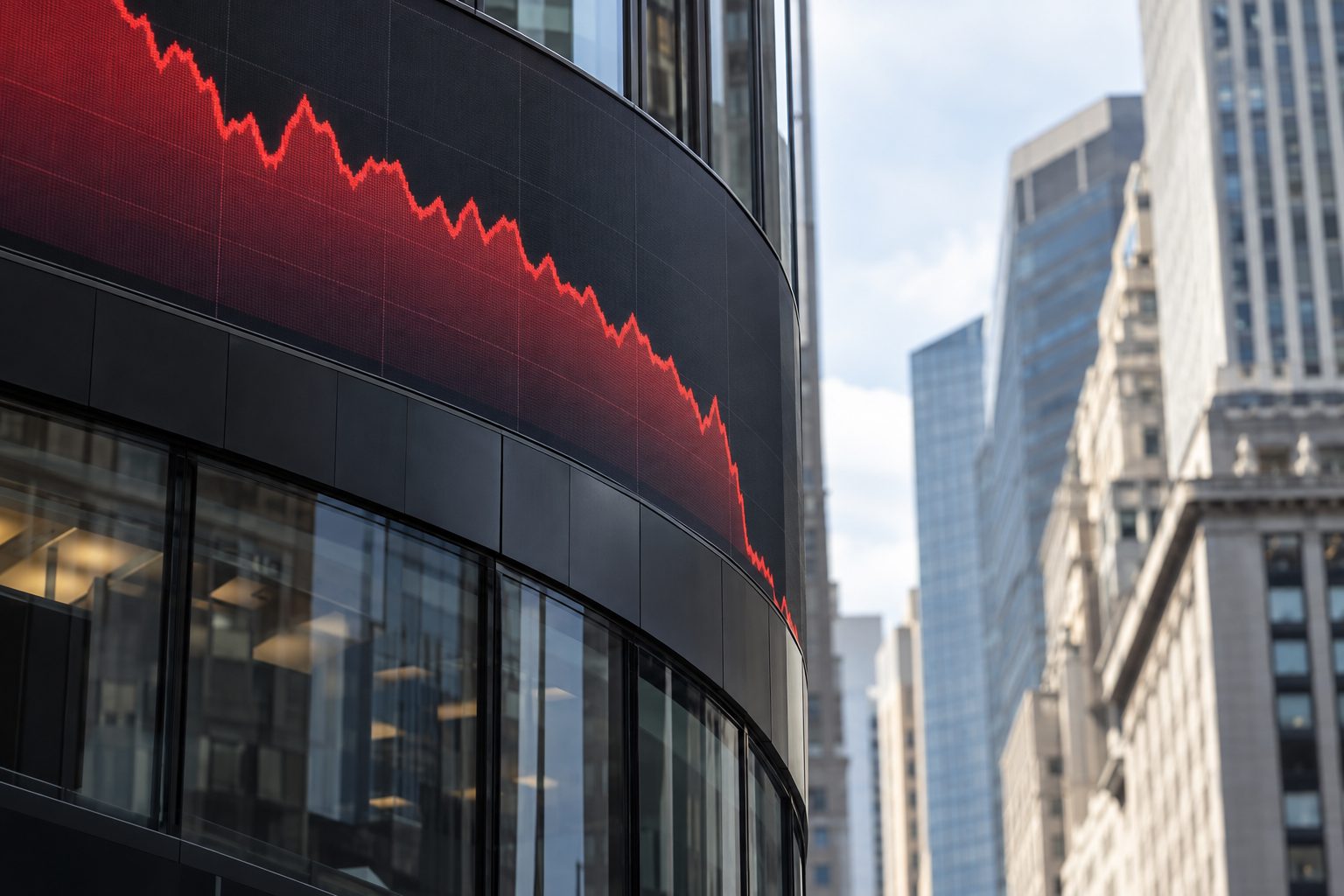
U.S. stocks fell further on Wednesday, October 14, as investors weighed stronger-than-expected inflation against corporate earnings and rising oil prices. The retreat followed a reported 1% drop in the S&P 500 during October 13 trading, when inflation concerns and weakness in artificial intelligence-related shares weighed on the index. Wednesday’s selling pulled Wall Street further below its record, while Treasury yields rose as investors considered the prospect of another interest-rate increase.
September’s consumer price index increased 0.6% from the previous month, matching expectations, but the annual increase of 3.7% exceeded economists’ forecast of 3.6%. The surprise also extended beyond food and energy. Core consumer prices rose 0.3% on the month and 2.6% from a year earlier, above expectations of 0.2% and 2.5%, respectively. Those readings left investors facing a report in which the monthly headline measure met forecasts but the annual headline figure and both core measures did not.
An intraday market snapshot showed the Nasdaq at 26,667.17 points, or 1.97%, while the Russell 2000 stood at 2,722.20%. The weakness therefore extended across both indexes rather than being confined to the AI-related shares that had contributed to the previous day’s fall.97% to 17.10. These were readings taken before the market closed, not final results for Wednesday’s session.
Read more: Gold falls $87 to $4,095 an ounce
Treasury trading reflected concerns that the inflation figures could prompt the Federal Reserve to raise interest rates again this month. A market snapshot quoted the 10-year yield at 5.278%, up more than 6 basis points, while the 30-year yield rose more than 2 basis points to 5. The rise in yields put the interest-rate outlook alongside earnings as a central issue for equities. Investors were assessing not only the latest price increases but also whether the figures would bring a further policy response.
The distinction between the headline and core figures mattered to that assessment. The monthly headline increase offered no surprise relative to forecasts, yet that result did not carry through to the rest of the report. Both measures excluding food and energy exceeded expectations, as did annual headline inflation. The report consequently gave investors more to consider than the immediate movement in energy prices, even as oil’s rise and concerns about an energy-supply shock remained prominent in market commentary.
Oil was moving in the opposite direction to stocks. November crude futures were quoted at $95.81 a barrel, up $1. That followed rising oil prices amid growing tensions between Saudi Arabia and the Iran-backed Houthis. Hedge fund manager and commodity trader Paul Tudor Jones said oil could gain another $20-$25 because of the Iran conflict. His projection was a forecast rather than an observed price increase, but it underscored the additional energy risk investors were weighing alongside the inflation release.
Read more: IMF warns Saudi attacks could have worldwide consequences
Jamie Cox, managing partner at Harris Financial Group, pointed to the energy-supply shock in his assessment of inflation and argued that relief depended on two wars ending. He also warned that the Federal Reserve risked making another policy error, drawing a comparison with its earlier treatment of COVID-era inflation as transitory. His emphasis on the source of price pressure added a different dimension to the market’s concern about higher rates: in his assessment, the inflation problem was also bound up with conflict and energy supply.
Corporate results provided another test of investor sentiment. JPMorgan Chase, Goldman Sachs, Citigroup and Wells Fargo had all reported earnings, while BlackRock, Morgan Stanley and Bank of America reported quarterly results on Wednesday. Bank of America shares fell after federal regulators imposed fines exceeding $1.2 billion for extensive shortcomings in controls intended to prevent money laundering and other illicit financial activity. That regulatory development gave investors a company-specific issue to assess alongside the broader pressures from inflation and the Treasury sell-off.
Daniela Hathorn, a senior market analyst, said investors appeared increasingly focused on companies’ outlooks rather than headline earnings beats. Executives were warning that the Treasury sell-off and uncertainty over interest rates were starting to affect dealmaking and trading, she said. Her assessment also offered a counterweight to the weaker markets: bank executives continued to describe consumer spending and corporate borrowing conditions as healthy. The earnings commentary therefore presented a more resilient economic picture than the stock-market retreat alone might suggest.
Investors were weighing whether the inflation report could lead to another Federal Reserve rate increase this month, alongside companies’ guidance amid the uncertainty. Wednesday’s figures heightened concern about renewed tightening without establishing what policymakers would decide. Investors also faced competing signals from rising energy costs, pressure on financial-market activity and banks’ reports of continued spending and borrowing strength. For now, stocks and Treasurys reflected renewed unease over inflation, while corporate commentary offered reasons to distinguish market weakness from a broader deterioration in economic conditions.