Art · Art
Shanghai’s art scene seeks resilience amid economic uncertainty
Two established fairs anchor Shanghai’s 10-15 November 2026 art week, as galleries, museums and artist communities offer sources of resilience amid economic upheaval.
By Calla Brenmoor · 4 min read
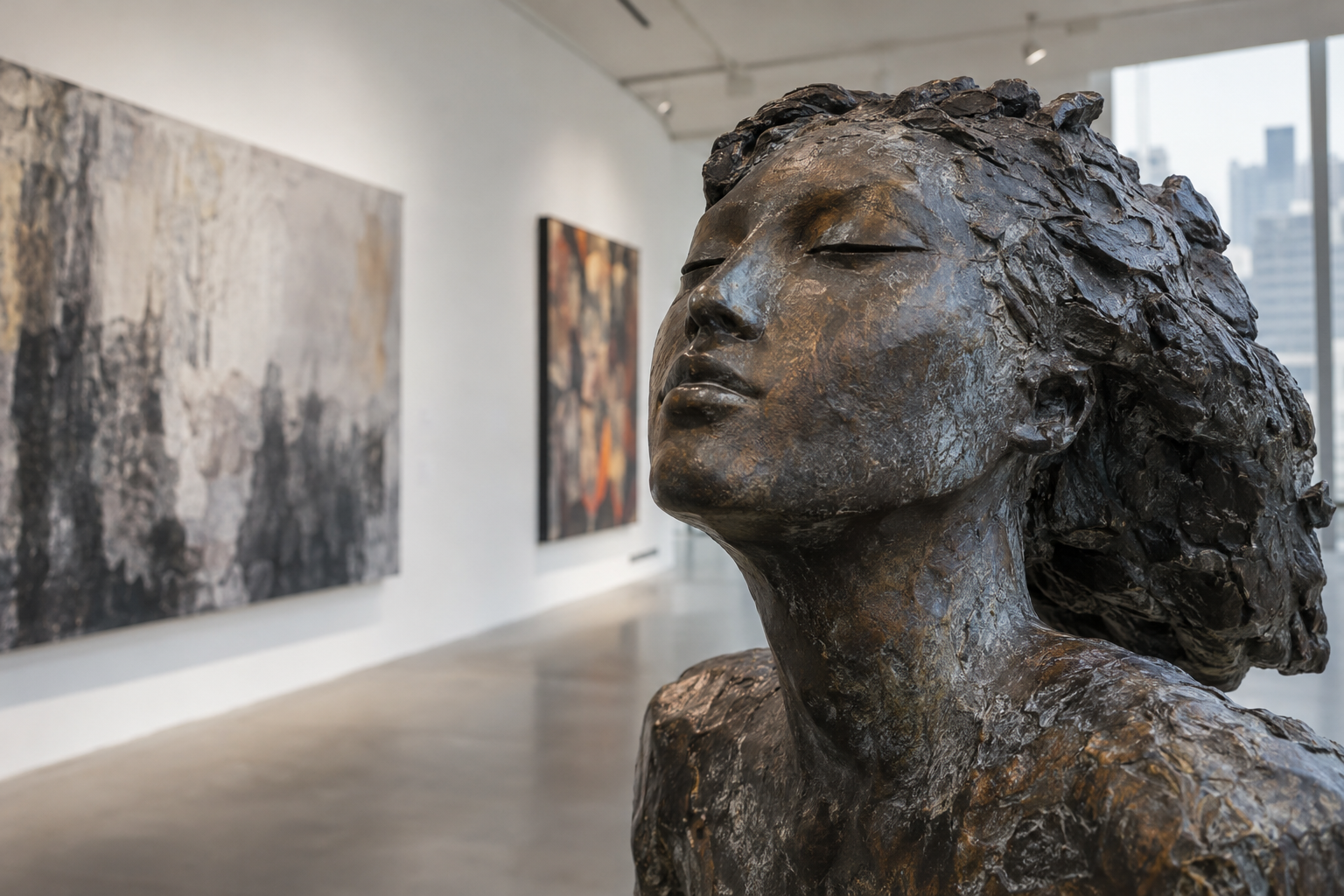
Shanghai’s annual art week opens amid economic uncertainty, bringing its galleries, museums, fairs and artist communities into a concentrated programme of exhibitions and events. The question running through the week is how that network can help the city’s art market withstand economic upheaval. The fairs provide a focal point, but the activity around them also directs attention towards the institutions and artistic relationships that support Shanghai’s contemporary art scene beyond the immediate business of exhibiting and selling.
The main fixtures are West Bund Art & Design, running from 10-15 November, and Art021 Shanghai, scheduled for 11-14 November. Established in 2014 and 2013 respectively, they anchor an art week taking place from 10-15 November 2026. Alongside them, the boutique fair Hangover Shanghai holds its second edition from 11-15 November. Those overlapping dates bring established fairs and a younger event into the same period, making the week a concentrated opportunity to assess the city’s art scene across different exhibition settings.
The historical context extends beyond the current fair calendar. Helbling places the internationalisation of the Shanghai Biennale in 2000, the contemporary art fair SH Contemporary, which ran in 2007-14, and the expansion of galleries and museums within a single era. That perspective situates today’s uncertainty within a longer institutional development rather than treating this week’s fairs as an isolated test. It also draws attention to the accumulated infrastructure surrounding the market: exhibitions, museums and galleries whose significance extends beyond a fair programme alone.
Read more: About 250 people attempt to move Chicago’s ‘Bean’
The dates and institutional histories establish the scope of the programme, not its commercial outcome. Art021 and West Bund serve as indicators of the market’s mood, but a busy calendar is not, by itself, evidence of stronger buying. The distinction matters to an assessment of resilience: continuing to stage exhibitions and sustain artistic activity is different from demonstrating an improvement in sales. Shanghai’s week offers a setting in which to consider both concerns, with the established fairs at its centre and a wider set of gallery and museum projects around them.
For Li’s gallery, the programme involves participating in both Hangover Shanghai and Art021 while presenting Tang Chao in its own space. That combination places the gallery in a boutique fair, an established large-scale event and its regular exhibition setting during the same week. It illustrates how the programme is distributed across formats rather than confined to the main fair venues. Whether that breadth translates into commercial results remains a separate question; what the schedule establishes is the gallery’s continued activity on several fronts.
Nan Ke Gallery offers another example of the exhibition activity accompanying the fairs. Co-founded by Otto Neu in 2022, it has a group exhibition about art and literature on view during fair week. Its subject adds a focus on artistic disciplines to a week unfolding amid economic questions. Within the wider programme, such an exhibition gives attention to the relationship between art and literature, illustrating that the week encompasses curatorial propositions as well as commercial events. The distinction allows the city’s gallery activity to be considered on more than one measure.
Read more: Europe joins U.S.-mediated Russia-Ukraine peace effort in Abu Dhabi
The institutional connections also reach outside Shanghai. Among artists represented by Vanguard, Liao Fei will be showing at Imagokinetics in Hangzhou during the same period, while the artist group Jiū Society has an exhibition in Nanjing. These presentations place activity associated with the gallery alongside exhibitions in nearby cities. They offer another context for considering resilience because the activity surrounding Shanghai’s art community is not limited to appearances at its fairs. The artists’ work is also being presented through institutions elsewhere, giving the week a wider geographical context.
Shanghai’s mid-career artists form another part of that context. Zhang Ruyi, who had a 2022 exhibition at Beijing’s UCCA Center for Contemporary Art, is among the city’s mid-career artists to watch. That exhibition history connects the discussion of Shanghai’s present prospects with institutional exposure beyond the city itself. Alongside the presentations in Hangzhou and Nanjing, it provides a reminder that an account of the scene involves artists’ exhibition histories as well as the changing roster of events on the local calendar.
The emphasis on institutional continuity sits alongside a more open-ended question about artistic direction. Helbling points to the task of determining what kind of art makes sense today. That is a different challenge from gauging the mood at the fairs, although both bear on the scene’s future. A programme can demonstrate sustained participation without settling either question. The week therefore offers a setting for both a commercial assessment of the market and a broader discussion about the work that galleries and institutions choose to present.
Attention now turns to the fairs and the exhibitions unfolding around them. Art021 concludes on 14 November, while West Bund and Hangover continue through 15 November. Their programmes will put different parts of Shanghai’s art network on view during a shared period of economic uncertainty. The fairs provide an immediate focal point, but the broader issue extends beyond their closing dates: how galleries, museums and artist communities sustain the relationships and exhibition activity that help underpin the city’s art market.